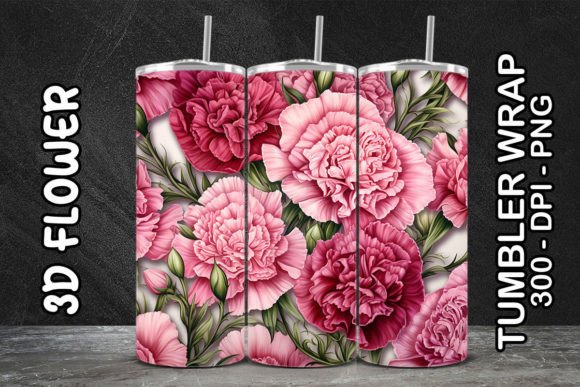
Evaluating 3D Violet Tumbler 1 for Sublimation Projects
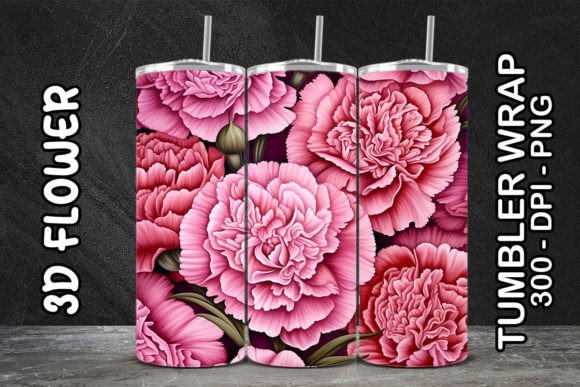
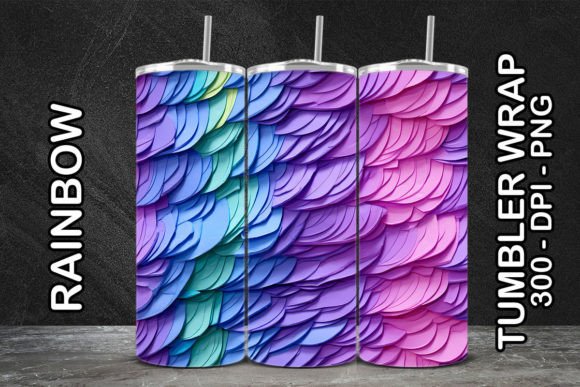
The 3D Violet Tumbler 1 design represents a specific category of digital assets tailored for crafters and small business owners who specialize in drinkware customization. Unlike flat, two-dimensional patterns, this resource utilizes shading, lighting effects, and perspective to create an illusion of depth on a curved surface. When evaluating this PNG file bundle, it is essential to understand that its primary value lies in its ability to simulate texture and dimension without requiring complex 3D modeling software or physical embossing tools. For adults researching sublimation options, distinguishing between genuine 3D-rendered aesthetics and standard flat graphics is the first step in determining if this asset aligns with current market trends and production capabilities.
Digital Asset Specifications and Technical Fit
Before integrating 3D Violet Tumbler 1 into a production workflow, verifying technical compatibility is crucial. This product is delivered as an instant digital download containing a ZIP file with multiple PNG images. The specifications are precise: each file measures 9.06 inches by 8.11 inches at 300 DPI. These dimensions are significant because they correspond to the standard printable area for many 20-ounce skinny tumblers, though slight variations exist across blank manufacturers.
The 300 DPI resolution is the industry baseline for high-quality sublimation. Lower resolutions often result in pixelation or blurring when the ink transfers from paper to polymer coating, particularly in designs that rely on fine gradients to achieve a 3D effect. Because 3D Violet Tumbler 1 depends on subtle color transitions to create its dimensional look, maintaining this resolution is non-negotiable. Users must also recognize that this is strictly a digital file; no physical tumbler or printed wrap is included. This distinction matters for budget planning and inventory management, as the cost reflects intellectual property and file preparation rather than tangible goods.
Comparing 3D Renders Versus Flat Vector Art
When selecting tumbler wraps, creators often choose between flat vector art and simulated 3D renders like 3D Violet Tumbler 1. Understanding the tradeoffs between these styles helps in making an informed decision based on the intended end-use and audience preference.
- Visual Depth and Realism: Flat vectors offer crisp lines and solid colors, making them ideal for typography-heavy designs or minimalist aesthetics. In contrast, 3D Violet Tumbler 1 provides a realistic texture that mimics materials such as carved wood, layered fabric, or embossed metal. If the goal is to create a premium, tactile appearance visually, the 3D style outperforms flat alternatives.
- Color Management and Printing: Flat designs are generally more forgiving during the sublimation process. They tolerate minor temperature fluctuations or pressure inconsistencies without losing integrity. Simulated 3D designs, however, rely heavily on accurate color reproduction. If your printer profile is not calibrated correctly, the shadows and highlights that define the "violet" depth may print too dark or wash out, flattening the intended effect.
- Design Flexibility: Vector files can be infinitely scaled and recolored without quality loss. Raster-based PNG files like those in this bundle have fixed dimensions and color values. While 9.06 x 8.11 inches covers most standard needs, resizing beyond these limits requires upscaling software that may degrade the 3D illusion. This makes 3D Violet Tumbler 1 less suitable for non-standard vessel sizes compared to scalable vector alternatives.
- Market Positioning: Flat floral or geometric patterns saturate the entry-level market. Detailed 3D renders often occupy a mid-to-high-tier niche because they suggest higher effort and sophistication. Choosing this format signals a departure from generic templates toward specialized visual storytelling.
Best-Fit Scenarios and Practical Applications
Not every project benefits from a simulated three-dimensional aesthetic. 3D Violet Tumbler 1 is best suited for specific contexts where visual richness adds perceived value. It performs exceptionally well for gift items, boutique retail products, and themed collections where the violet color palette aligns with branding or seasonal trends (such as spring florals or lavender-themed events). The depth in the design draws attention in photographs and social media listings, potentially increasing click-through rates for online sellers.
Conversely, this asset may not be the optimal choice for corporate promotional merchandise requiring strict Pantone matching or high-contrast logos. The nuanced shading inherent in 3D renders can sometimes interfere with brand guidelines that demand flat, uniform colors. Additionally, if you are new to sublimation and still troubleshooting press settings, starting with a complex 3D file can be frustrating. Beginners often achieve better initial results with simpler, high-contrast graphics while they refine their time, temperature, and pressure variables. 3D Violet Tumbler 1 serves as an excellent intermediate-to-advanced resource once foundational skills are established.
Evaluating Sizing and Alignment Constraints
A critical decision factor for any digital tumbler wrap is sizing accuracy. The provided dimensions of 9.06 x 8.11 inches are approximate guides rather than universal guarantees. Tumbler blanks vary significantly between suppliers; some 20-ounce skinny tumblers require a 9.3-inch width, while others fit perfectly within 9 inches. Relying solely on the file’s native size without measuring your specific blank can lead to misaligned seams or unprinted gaps.
Practical evaluation involves printing a test page on regular paper before using expensive sublimation ink. Wrap the paper around your specific tumbler model to verify coverage. If adjustments are necessary, use image editing software to scale the 3D Violet Tumbler 1 file proportionally. Because the design uses edge-to-edge rendering, stretching the image disproportionately will distort the 3D perspective, making round objects appear oval or warping the light source direction. Always maintain aspect ratio during resizing to preserve the artistic integrity of the render.
Tradeoffs and Limitations to Consider
While 3D Violet Tumbler 1 offers distinct aesthetic advantages, potential users should weigh several limitations against their operational needs. As a pre-rendered PNG bundle, customization options are restricted. You cannot easily change the light source angle, alter individual element placement, or modify the base violet hue without advanced masking and recoloring techniques. This contrasts with layered PSD or AI files where elements remain editable. If your business model relies on offering extensive personalization to clients, this ready-to-print format may feel restrictive.
Another consideration is file management and storage. High-resolution 3D renders are typically larger in file size than flat graphics. While modern devices handle this easily, users working on older hardware or with limited cloud storage should account for this. Furthermore, because the item is an instant digital download, there is no return window once files are accessed. This places the burden of due diligence entirely on the buyer. Ensuring your software supports PNG transparency (if applicable) and that your printer handles 300 DPI raster images efficiently is a prerequisite purchase step.
Making the Final Selection Decision
Choosing 3D Violet Tumbler 1 ultimately depends on balancing aesthetic goals with technical reality. It is a strong candidate for creators seeking to elevate their product line with sophisticated, textured visuals without investing in 3D modeling training. The included bundle of several PNG files provides variety within a cohesive theme, supporting batch production or coordinated sets. However, it requires a disciplined approach to sizing verification and color management that simpler designs do not demand.
If your priority is speed, ease of editing, or absolute color precision for corporate clients, exploring vector-based or flat raster alternatives may yield better operational efficiency. But if your objective is to capture consumer interest through visual depth and unique stylistic presentation, and you possess the sublimation expertise to execute it faithfully, this digital asset offers a viable pathway to differentiated products. Evaluate your current equipment calibration, measure your blank inventory carefully, and confirm that the violet 3D aesthetic resonates with your target demographic before proceeding. Informed selection ensures that the digital resource translates effectively from screen to physical product, maximizing both creative satisfaction and commercial viability.