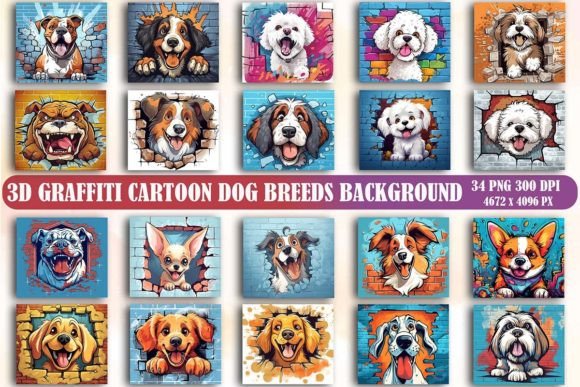
Integrating the 3D Graffiti Happy Samoyed Dog into Modern Digital and Print Workflows
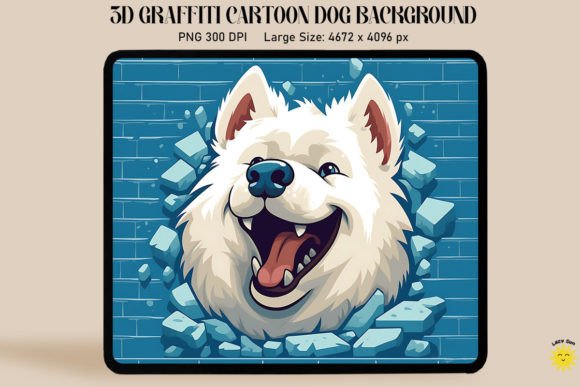
The intersection of urban street art aesthetics and adorable animal imagery has created a distinct niche in contemporary graphic design. The 3D Graffiti Happy Samoyed Dog represents this fusion perfectly, offering creators a high-resolution asset that bridges the gap between edgy typography and wholesome character design. For professionals and hobbyists alike, understanding how to leverage such specific digital assets is crucial for maintaining workflow efficiency and ensuring visual consistency across various media. This asset is not merely an illustration; it is a versatile component designed for scalability, commercial application, and creative flexibility.
Technical Specifications and Resolution Management
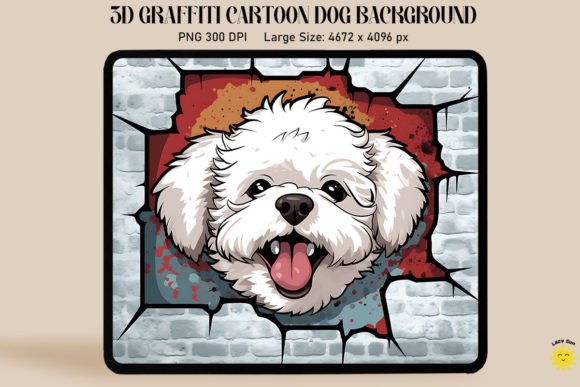
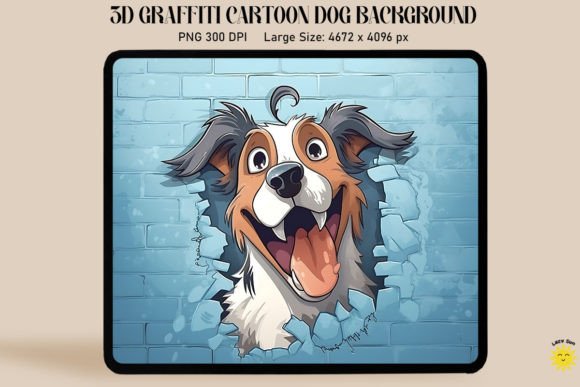
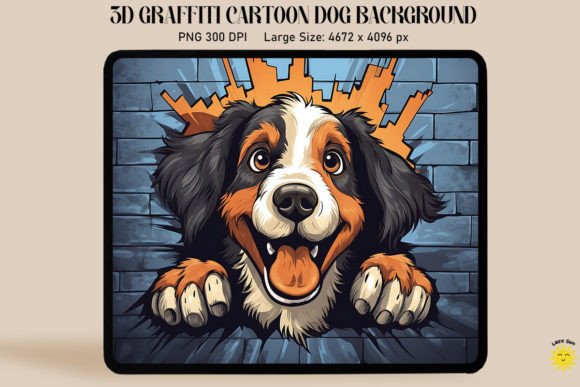
When working with raster-based digital art, resolution is the primary determinant of versatility. The 3D Graffiti Happy Samoyed Dog is provided as a single PNG file with approximate dimensions of 4672 x 4096 pixels at 300 DPI. These specifications are significant for several technical reasons that impact both digital display and physical printing.
Understanding Pixel Density: At 300 DPI (dots per inch), this image contains sufficient pixel data to produce crisp, professional-grade prints up to roughly 15 inches wide without interpolation artifacts. This makes it suitable for standard poster sizes, large greeting cards, and merchandise like tote bags or apparel transfers. For web use, where screens typically display at 72 to 96 PPI, the native resolution allows designers to downscale the image significantly. Downscaling preserves sharpness and reduces aliasing, whereas upscaling often introduces blur. Starting with a 4672-pixel width provides a safety margin for cropping or zooming within a layout without degrading the final output quality.
The PNG Advantage: Unlike JPEG formats which utilize lossy compression, the PNG format retains all original pixel data and supports alpha transparency. This is essential for graffiti-style art, which often features complex edges, spray paint splatters, and non-rectangular silhouettes. The transparent background allows the 3D Graffiti Happy Samoyed Dog to be composited over any color, texture, or photograph seamlessly. Designers can place the dog against a brick wall texture for an authentic street art look or against a solid pastel background for a cleaner, sticker-like aesthetic without needing to manually mask out a white box.
Creative Applications Across Different Media
The stylistic duality of this asset—combining the softness of a Samoyed with the boldness of 3D graffiti—enables its use in diverse projects that might otherwise seem incompatible. Understanding these use cases helps creators maximize the return on their digital asset library.
Social Media and Digital Branding
In the realm of social media, engagement is often driven by pattern interruption. A happy Samoyed rendered in vibrant 3D graffiti styles stops the scroll more effectively than generic stock photography. With dimensions exceeding 4000 pixels, this file serves as a master asset for multiple platforms. It can be cropped into a square for Instagram posts, resized into a vertical format for Stories and Reels covers, or adapted into a landscape banner for YouTube or LinkedIn headers. The high resolution ensures that even after platform-specific compression algorithms process the image, the details in the fur texture and graffiti shading remain visible.
Print Collateral and Stationery
For event planners and stationery designers, this graphic offers a unique tone for invitations and announcements. Traditional pet-themed stationery can sometimes appear juvenile, but the graffiti element adds a layer of modern sophistication and energy. This makes the 3D Graffiti Happy Samoyed Dog appropriate for teen birthday parties, pet adoption events, or even informal business launches where brand personality is paramount. When designing for print, the 300 DPI specification ensures that the transition from screen to paper maintains the vibrancy of the digital proof, provided the printer is calibrated correctly.
Scrapbooking and Personal Crafting
Digital scrapbooking relies heavily on high-quality elements that mimic physical textures. The 3D rendering style of this Samoyed provides inherent depth and shadow, allowing it to sit naturally atop digital paper backgrounds. Crafters can resize the 4672 x 4096 px canvas to fit standard 12x12 layouts or smaller journal spreads. Because the file is a raster PNG rather than a vector, it behaves like a traditional sticker or cutout, making it intuitive for users transitioning from physical to digital crafting methods.
File Handling and Workflow Integration
Acquiring a digital asset is only the first step; proper file management ensures longevity and ease of access. The 3D Graffiti Happy Samoyed Dog is delivered in a .ZIP archive. This compression method protects the file during transfer and keeps the download size manageable.
Extraction Protocols: Users must unzip the file before it can be used in design software. On Windows, this involves right-clicking the folder and selecting "Extract All." On macOS, a double-click typically initiates the Archive Utility. Attempting to drag a PNG directly from inside a zipped folder into Photoshop or Canva without extracting it first can lead to temporary file errors or failure to save edits. Always extract to a designated project folder or asset library.
Software Compatibility: As a standard PNG, this file is universally compatible. It works natively in professional suites like Adobe Photoshop, Illustrator, and Affinity Designer. It is also fully supported by consumer-friendly platforms such as Canva, Procreate, and Cricut Design Space (for print-then-cut projects). However, users should note that because this is a raster image, it does not possess the infinite scalability of an SVG. While 4672 pixels is substantial, extreme enlargement beyond 100% at 300 DPI will result in pixelation. For billboard-sized applications, vectorization or AI-upscaling tools may be required, though for most standard design needs, the native resolution is optimal.
Navigating Technical Limitations and Expectations
To maintain professional standards and avoid production errors, creators must understand what this asset is not. Clear expectations prevent frustration during critical project phases.
- Not a Cutting File: A common misconception is that all digital craft files are vectors suitable for vinyl cutting. The 3D Graffiti Happy Samoyed Dog is strictly a raster image. It lacks the path data required for plotter machines to trace lines automatically. If using this for vinyl decals, one must manually trace the image or use auto-trace features within cutting software, acknowledging that complex graffiti details may require simplification.
- Color Variance: Digital screens emit light using RGB color space, while printers reflect light using CMYK inks. The vibrant neon or saturated tones typical of 3D graffiti art may appear slightly duller in print. Professionals should always perform a test print or convert the file to CMYK profile before mass production to anticipate color shifts. Monitor calibration also plays a role; what looks bright on an OLED phone screen may look different on a matte laptop display.
- Resizing Considerations: While the description notes the design can be resized according to needs, this applies primarily to reduction. Maintaining aspect ratio is vital to prevent the Samoyed from appearing stretched or squashed. Using the shift key while transforming in design software locks proportions, preserving the anatomical correctness of the dog and the perspective of the 3D render.
The Role of Niche Assets in Visual Storytelling
In an era of AI-generated content and ubiquitous stock libraries, specific, curated assets like the 3D Graffiti Happy Samoyed Dog offer a distinct advantage: intentionality. This graphic was created with a specific stylistic vision that combines two contrasting themes. For educators creating engaging materials for students, this blend of cute and cool can make learning resources feel more relevant to youth culture. For researchers presenting data on pet ownership trends or urban art movements, such visuals serve as compelling anchors that break up dense text.
Furthermore, supporting independent digital creators like Lazysun fosters a diverse ecosystem of design resources. When creators purchase specific, high-quality assets rather than relying solely on algorithmic generation, they invest in human artistry and technical precision. The attention to detail in a 4672 x 4096 px hand-rendered or meticulously composed 3D piece often surpasses the coherence of automated alternatives, particularly in complex textures like fur and spray paint drips.
Best Practices for Long-Term Asset Utility
To get the most value from this digital product, organization is key. Renaming the file upon extraction to include keywords (e.g., "Samoyed_Graffiti_3D_4k.png") aids future searchability within large asset libraries. Keeping the original high-resolution master file separate from project-specific exports prevents accidental overwriting or quality loss. When sharing designs incorporating this element online, be mindful of licensing terms regarding redistribution versus end-use. Typically, digital assets are licensed for incorporation into new designs, not for resale as standalone clipart.
Ultimately, the utility of the 3D Graffiti Happy Samoyed Dog lies in its balance of technical adequacy and stylistic uniqueness. It solves a specific problem for designers who need high-impact, emotionally resonant imagery that doesn't sacrifice edge or professionalism. By respecting the technical parameters of the PNG format, understanding the distinction between raster and vector workflows, and applying color management best practices, creators can seamlessly integrate this joyful, urban-inspired canine into projects that resonate with audiences across digital and physical spaces.