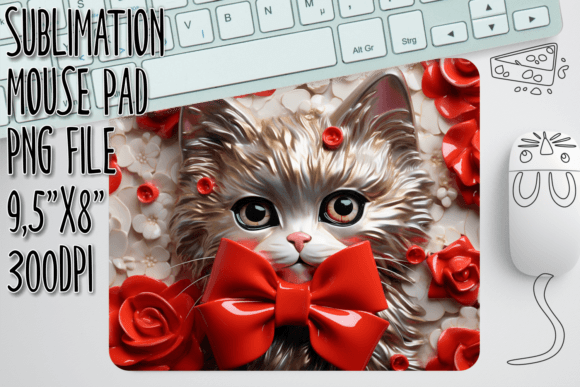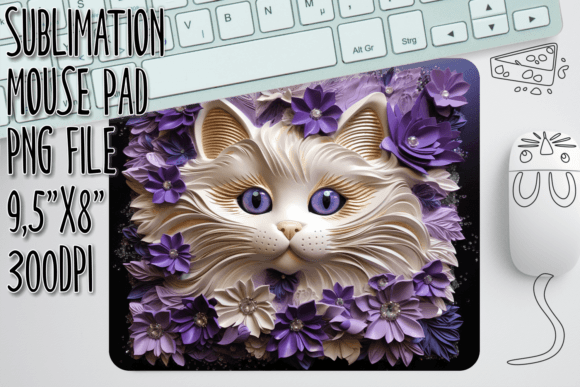
Playful 3D Cat Mouse Pad Art: A Digital Sublimation Resource for Custom Creators
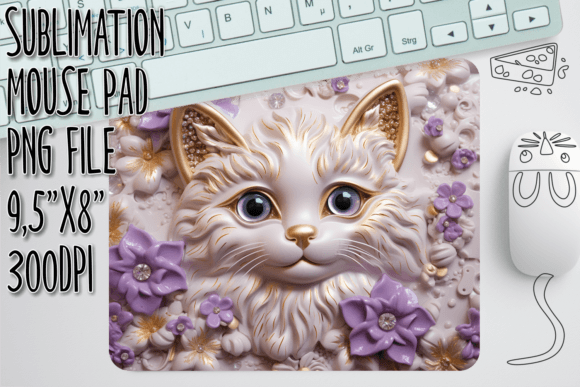
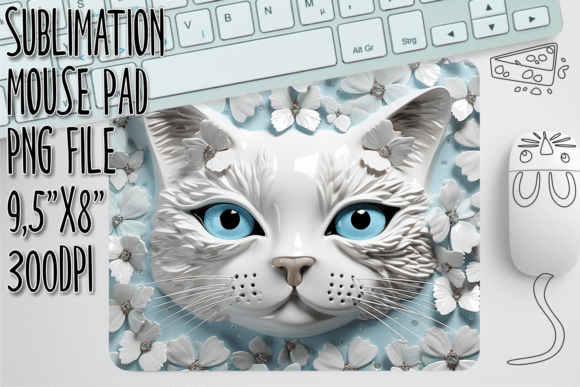
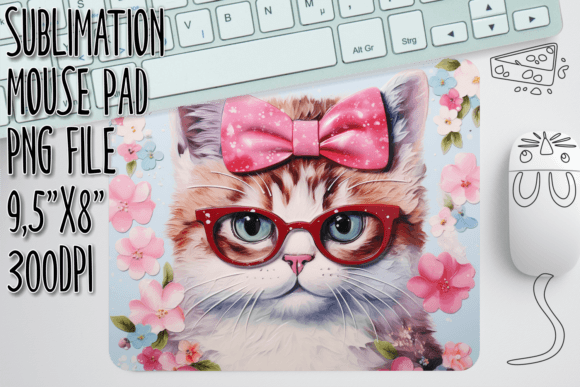
When you are looking to add a touch of whimsy and technical precision to your sublimation projects, the Playful 3D Cat Mouse Pad Art serves as a specialized digital asset designed specifically for heat transfer applications. This isn't just a cute picture; it is a high-fidelity raster image engineered to create the optical illusion of three-dimensional depth on a flat surface. For creators in the personalized gift market or hobbyists upgrading their home office setups, this design bridges the gap between generic clip art and professional-grade merchandise. Because this is a digital download consisting of a single PNG file, it offers immediate access to a print-ready asset that eliminates the need for complex 3D rendering software or advanced illustration skills.
Real-World Applications for Pet-Themed Merchandise
The most immediate application for this artwork lies in the booming pet lover niche. However, successful sublimation businesses know that "cat stuff" is too broad a category. The specific utility of this Playful 3D Cat Mouse Pad Art comes from its ability to target micro-niches within that broader audience. Consider the gamer demographic. Gaming accessories are a massive market, but many mouse pads feature aggressive, dark aesthetics. This design offers a softer, yet still visually engaging alternative for streamers, cozy gamers, or VTuber fans who want desk mats that reflect a lighter personality without sacrificing visual interest. The 3D effect adds a layer of sophistication that separates it from standard flat cartoons, making it appealing to adult consumers rather than just children.
Beyond gaming, this file is exceptionally useful for corporate gifting and employee appreciation kits. Veterinary clinics, animal shelters, and pet grooming salons often struggle to find branded merchandise that feels professional yet approachable. A standard logo mug can feel impersonal, but a custom mouse pad featuring this playful 3D cat can serve as a functional desk accessory that reinforces brand identity in a subtle way. Because the file is a high-resolution PNG, it can be easily paired with clinic logos or text overlays in your design software before printing, allowing for hybrid designs that merge artistic flair with business branding.
Technical Specifications and Workflow Integration
Understanding the technical parameters of this file is crucial for avoiding production errors. You will receive one PNG file measuring 9.5 x 8 inches at 300 DPI. This resolution is the industry standard for sublimation, ensuring that when the ink transitions from paper to substrate under heat, the edges remain crisp and the gradients smooth. The 9.5 x 8 inch dimension is strategically sized to cover standard rectangular mouse pads while providing enough bleed area for larger desk mats. If you are working with smaller circular pads or oversized gaming mats, the raster nature of the PNG allows for scaling, though maintaining the original aspect ratio prevents the 3D perspective from looking distorted.
It is vital to distinguish what this file is not. This is not an SVG and cannot be used as a cutting file for vinyl plotters or laser engravers. There are no vector paths to manipulate, recolor individually, or resize infinitely without quality loss. This distinction matters because users accustomed to Cricut or Silhouette workflows might expect to ungroup elements. Instead, treat this Playful 3D Cat Mouse Pad Art as a complete, flattened composition. Your customization happens through layering in programs like Photoshop, Affinity Photo, or even Canva, rather than node editing. This limitation is actually a strength for sublimation, as it preserves the complex shading and lighting effects required to sell the 3D illusion—effects that are often lost when converting to vector formats.
Strategic Considerations for Substrate Selection
The success of a 3D optical illusion design depends heavily on the canvas you choose. While the file is optimized for mouse pads, the specific type of mouse pad blank dictates the final outcome. Soft, fabric-top mouse pads with white polyester coatings are ideal because they absorb the dye fully, allowing the shadows and highlights of the 3D cat to pop against the matte texture. Hard plastic or glass pads can sometimes reflect light in a way that flattens the perceived depth or creates glare that obscures the detail.
Color management is another practical consideration. Since this is a pre-rendered PNG, you cannot adjust the internal colors of the cat itself. If your printer profile tends to print warm or cool, you may need to apply global color correction layers over the entire image rather than tweaking individual elements. Test prints on scrap fabric are highly recommended before committing to expensive blanks. The 300 DPI quality means the file holds up well to inspection, but sublimation ink behaves differently on various polymer coatings. Verifying that the shadow details in the 3D render don't get muddy during the heat press phase ensures the final product retains that premium, tactile look.
Expanding Beyond Mouse Pads: Versatile Digital Assets
While named for mouse pads, the 9.5 x 8 inch footprint makes this Playful 3D Cat Mouse Pad Art surprisingly versatile for other flat sublimation products. The dimensions align closely with standard ceramic tiles, slate coasters, and even certain sizes of aluminum photo panels. In these contexts, the 3D effect can be even more pronounced due to the rigid, glossy surface of hard substrates. Imagine a set of coasters where the cat appears to be sitting directly on the table surface, or a garden flag where the perspective draws the eye from a distance.
For sellers on platforms like Etsy or Amazon Handmade, this versatility supports product line expansion without additional design costs. You can create a cohesive "3D Cat Collection" spanning multiple product types using this single digital asset. This consistency helps build brand recognition. Furthermore, because the purchase is for a downloadable design only, there is no inventory risk associated with the artwork itself. You can test market demand by listing mockups of the design on different products before physically producing them. This lean approach allows creators to validate whether their specific audience prefers the 3D aesthetic on functional tech accessories or decorative home goods.
Navigating Digital Design Limitations and Opportunities
Purchasing a digital download requires a shift in mindset from buying physical supplies. There is no tangible product shipped to your door; the value is entirely in the utility of the file. This model benefits creators who need instant gratification or are working on tight deadlines for craft fairs or holiday rushes. However, it also places the responsibility of quality control on the user. Before purchasing, ensure your sublimation setup is calibrated. High-resolution art like this exposes printer banding or heat press unevenness more readily than low-detail graphics.
Despite being a static PNG, the file invites creative problem-solving. Users have found success by using this art as a centerpiece surrounded by custom typography or border patterns created separately. This hybrid approach mitigates the inability to edit the core image while still allowing for personalization. For example, adding a pet’s name in a complementary font below the 3D cat transforms a generic stock design into a bespoke memorial or gift. The key is to view the Playful 3D Cat Mouse Pad Art not as a finished product, but as a high-quality foundation upon which unique, marketable items can be built. By understanding both its technical boundaries and its creative potential, makers can leverage this digital resource to produce professional results that resonate with cat enthusiasts and tech users alike.